Mason: The Blackletter Font That Commands Attention
There are fonts that whisper, and there are fonts that roar. Mason belongs firmly in the latter category. This isn't your typical display typeface—it's a visual declaration, a piece of typography that doesn't just sit on a page but actively shapes the atmosphere around it. For anyone working on projects that demand a dark, powerful, and unmistakably bold presence, Mason offers something few fonts can: genuine character forged into every letterform.
What Makes Mason Visually Distinctive
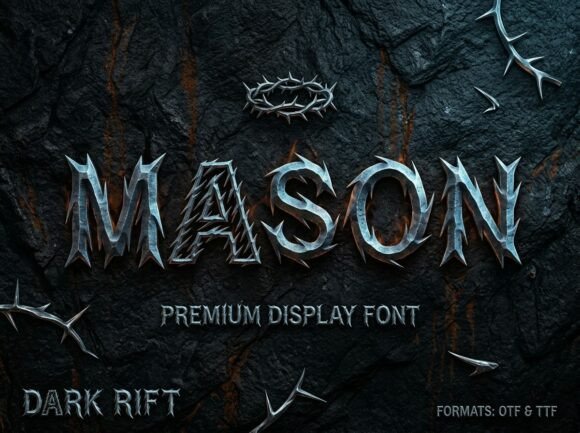
At its core, Mason is a blackletter font, but calling it that alone undersells what it actually delivers. The design draws from medieval calligraphy traditions while injecting a modern, almost industrial edge. Each letter features sharp, aggressive angles paired with what can only be described as thorn-like protrusions—small details that give the typeface an organic, almost dangerous quality. It looks like something carved from iron or etched into stone by someone who meant business.
The metallic texture is another standout feature. Mason's letterforms carry a weathered bronze-to-iron gradient that creates genuine depth, almost as if the letters were rendered in three dimensions. This isn't flat, lifeless typography. The "forged-in-fire" aesthetic makes each character feel substantial, weighted, and real. Whether you're viewing it on screen or in print, the dimensional quality holds up, which matters enormously for projects where visual impact is non-negotiable.
For designers who work across dark fantasy, horror, metal music branding, or edgy streetwear, this kind of visual language speaks directly to their audience. The font does heavy lifting that would otherwise require hours of custom illustration or effects work.
Where Mason Truly Shines: Real-World Applications
Understanding where a font works best is just as important as liking how it looks. Mason excels in specific contexts where boldness and atmosphere are the goals.
Logo design and brand identity represent perhaps the strongest use case. If you're building a brand that operates in the horror, fantasy, extreme sports, or alternative music space, Mason gives your wordmark instant credibility. A metal band logo, a craft brewery with a dark mythology theme, a gaming studio specializing in gothic adventures—these are the kinds of brands that benefit from a typeface with this much personality baked in.
Book covers and editorial design are natural fits as well. Dark fantasy novels, horror anthologies, and thriller titles often struggle with finding typography that matches the intensity of their cover art. Mason bridges that gap. Its sharp edges and textured surfaces complement moody illustrations without competing against them, provided the designer uses it thoughtfully for titles and headers rather than body copy.
Poster design and event promotion also benefit significantly. Music festivals, haunted attractions, film screenings, and convention graphics all need type that grabs attention from a distance. Mason's heavy weight and distinctive silhouette make it readable even at larger scales where subtlety would get lost.
Packaging design for specialty products—hot sauces with skull branding, craft spirits with gothic labels, artisanal products targeting an alternative demographic—can leverage Mason to create shelf presence that stops people mid-aisle. The key here is restraint. Using it for the product name while pairing it with a cleaner secondary font for descriptions keeps the design balanced.
Don't overlook social media graphics and digital content either. YouTube thumbnails, Instagram stories, podcast artwork, and Twitch overlays all benefit from type that pops at small sizes on crowded feeds. Mason's distinctive character means people recognize your content before they even read the words.
Merchandise and apparel represent another strong application. Streetwear brands, band merch, and print-on-demand products targeting niche communities often rely on bold typography to carry designs that are intentionally minimal. A single word set in Mason across a hoodie or t-shirt communicates attitude without needing additional graphics.
Pairing Mason With Other Typefaces
No font exists in isolation, and Mason is no exception. Because it's so visually intense, pairing it thoughtfully with complementary typefaces prevents designs from feeling overwhelming.
A clean sans serif font works exceptionally well as a secondary typeface. Think of fonts like Montserrat, Raleway, or even something more geometric like Futura. The contrast between Mason's ornate, textured characters and a simple, modern sans serif creates visual hierarchy naturally. Your headers carry the dramatic weight while supporting text remains accessible and easy to read.
For projects that need a slightly warmer secondary option, a subtle script font or handwritten font can add human contrast to Mason's industrial severity. This works particularly well for invitation designs, editorial layouts, or brand identities that want to balance edge with approachability.
Avoid pairing Mason with other highly decorative or serif fonts that compete for attention. The goal is contrast, not conflict. When both fonts fight for dominance, the design loses clarity and the viewer doesn't know where to look first.
Practical Considerations Before Using Mason
Readability always matters, even with display fonts designed for impact. Mason works best at larger sizes—think headers, titles, logos, and short phrases. Attempting to set body copy or long paragraphs in a blackletter typeface like this will frustrate readers and undermine your design goals. Use it strategically for maximum effect where it counts most.
Testing your font choices in context before committing is always worthwhile. Mock up your design at the actual size people will encounter it. A logo that looks striking on your 27-inch monitor might lose detail when scaled down to a favicon or business card. Mason's textured details hold up well across sizes, but checking never hurts.
Licensing is another practical consideration that many designers and small business owners overlook until it becomes a problem. If you're using Mason for commercial projects—client work, products for sale, business branding—make sure you understand the licensing terms. A premium font with proper commercial licensing protects you legally and ensures the type designer is fairly compensated for their craft. It's a small investment that prevents headaches down the road.
Take time to explore what's included with the font package as well. Many premium typefaces come with multiple weights, alternates, ligatures, or stylistic variations that expand your creative options significantly. Understanding what's available means you can push the font further than the basics.
Making Typography Work for Your Brand
Font selection is one of those decisions that seems small but carries outsized influence over how people perceive your brand or project. The right typeface creates instant emotional association. When someone sees Mason on a book cover, their brain immediately processes "dark," "powerful," and "serious" before they've consciously read a single word. That's the kind of pre-verbal communication that strong typography provides.
For creative entrepreneurs and designers building brand identities, consistency across touchpoints is essential. Using Mason across your logo, headers, social templates, and marketing materials creates a cohesive visual language that audiences learn to recognize. Over time, that recognition becomes brand equity—people associate your visual style with your content or products before they even engage with them.
The key is matching your typography to your actual audience and goals, not just your personal taste. Mason is a spectacular font, but it's spectacular for specific contexts. A law firm probably shouldn't use it. A children's brand definitely shouldn't. But for the right project, it transforms good design into something genuinely memorable.
Typography is ultimately about communication, and Mason communicates with unmistakable authority. When your project needs to carve its identity into the shadows rather than politely introduce itself, this typeface delivers exactly that.