Etch: A Display Typeface That Commands Attention
Every designer knows the struggle: you need a typeface that doesn't just sit quietly on the page but steps forward and takes charge. That's precisely where Etch enters the conversation. This isn't a font that whispers; it's a bold, all-caps display typeface designed for moments when subtlety won't cut it. With its striking decorative elements and strong visual personality, Etch is built for projects where every letter needs to feel like a deliberate artistic choice. Whether you're crafting a brand identity from scratch or looking to inject some serious energy into a marketing campaign, understanding what this font offers can open up new creative possibilities.
Visual Personality That Stands Apart
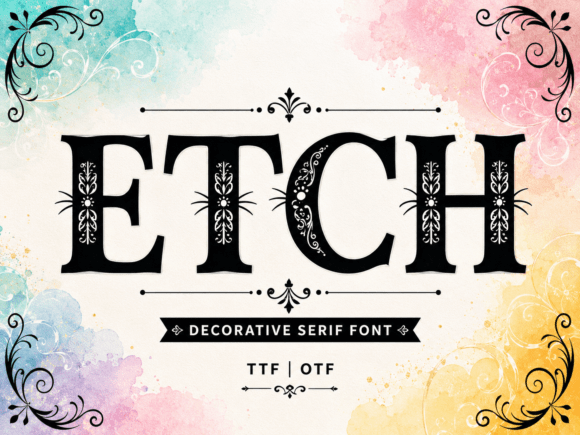
What makes Etch immediately noticeable is its refusal to blend in. The letterforms feature unique artistic detailing—think of it as the typographic equivalent of an intricate engraving or a hand-tooled leather surface. Each uppercase character carries a weight and presence that draws the eye, making it ideal for contexts where readability at a glance matters more than reading long paragraphs of text. This is the kind of typeface you'd spot on a craft beer label, a boutique clothing tag, or the hero banner of a lifestyle brand's homepage. It carries a certain rugged elegance, balancing decorative flair with enough structure to feel professional rather than chaotic.
Because Etch is an all-caps design, it naturally creates a sense of uniformity and strength. There's no mixing of upper and lowercase letters to break up the visual rhythm, which means headlines and logos built with it feel cohesive and intentional. For anyone working on a project that needs to convey authority, creativity, or artisanal quality, this characteristic alone can be a significant advantage.
Where This Typeface Truly Shines
Think about the projects where first impressions are everything. Logo design is an obvious starting point. A wordmark set in Etch immediately communicates that a brand values craft and visual impact. It works particularly well for businesses in the food and beverage space, outdoor and adventure brands, artisanal product makers, or any company that wants to project a bold, confident identity. The decorative qualities of the letters mean your logo can stand on its own without needing elaborate illustrations or graphic elements surrounding it.
Packaging design is another arena where this display font excels. On a crowded shelf, products have roughly three seconds to catch a shopper's eye. Etch's strong visual personality helps packaging stand out in that brief window. Imagine a hot sauce label, a specialty coffee bag, or a candle box—the intricate letterforms add a layer of perceived quality and craftsmanship that can influence purchasing decisions before a customer even reads the product description.
Social media graphics benefit enormously from typefaces that look distinctive even at small sizes or when viewed quickly on a phone screen. Use Etch for Instagram story headers, Pinterest pins, YouTube thumbnails, or Facebook ad headlines. Its all-caps structure ensures that text remains legible and impactful even when surrounded by competing visual noise. Bloggers and content creators who want to establish a recognizable visual style across their platforms will find it particularly useful for creating consistent header graphics and promotional images.
Don't overlook print applications either. Posters, event invitations, editorial layouts, and merchandise like t-shirts or tote bags all benefit from a typeface that carries inherent visual interest. Etch can serve as the centerpiece of a wedding invitation suite, give a magazine feature spread some editorial edge, or make a band's concert poster impossible to ignore. For small business owners creating their own marketing materials—business cards, flyers, brochures—a strong display font like this one can elevate amateur-looking designs into something that feels genuinely professional.
Practical Considerations for Real Projects
Before incorporating Etch into your workflow, it's worth thinking through a few practical details. First, because it's a display typeface designed specifically for headlines and short bursts of text, you'll want to pair it with something more neutral for body copy. A clean sans serif font or a straightforward serif typeface will complement Etch without competing for attention. Think of it as a team: Etch handles the heavy lifting of grabbing attention, while your secondary font carries the longer, more detailed information. Testing a few font pairings before committing to a final design is always time well spent.
Readability is another important factor. While Etch is crafted to be legible at display sizes, all-caps decorative fonts can become harder to read when set too small or used in long strings of text. Reserve it for headlines, logos, single words, or very short phrases where its artistic qualities can be appreciated without straining the reader's eyes. For body text, subheadings, or captions, switch to a more conventional typeface.
When you purchase Etch, you receive both OTF and TTF files. The OTF format is the professional standard and works seamlessly with advanced design software like Adobe Illustrator, Photoshop, and InDesign. The TTF format ensures universal compatibility, so you can use the font across different devices and applications without issues. This flexibility matters whether you're designing on a desktop workstation or collaborating with clients and printers who may use different systems.
Licensing is something many creative professionals overlook until it becomes a problem. If you're using Etch for commercial projects—client logos, products for sale, marketing campaigns—make sure your license covers that use. Most premium font licenses distinguish between personal and commercial use, and understanding the terms upfront prevents headaches later. It's a small step that protects both you and your clients.
Building Stronger Visual Identities
A typeface is more than just a collection of letters; it's a tool for communication. The fonts you choose send signals about a brand's personality, values, and positioning before a single word is consciously read. Etch communicates boldness, creativity, and a willingness to stand out. For entrepreneurs and brand strategists, aligning those qualities with a brand's core message can strengthen recognition and create more memorable touchpoints across every platform.
Visual consistency across different media—website headers, social media profiles, printed materials, product packaging—builds trust and professionalism. When a customer sees the same distinctive typeface used thoughtfully across multiple interactions, it reinforces brand recognition in a way that generic fonts simply can't. Etch, with its strong visual identity, makes that consistency easier to achieve because it's inherently distinctive.
Ultimately, the best way to know if a typeface works for your project is to experiment with it. Set your brand name in it. Mock up a headline. Place it on a product label or a social media template. See how it feels in context. Etch is a design asset that rewards that kind of hands-on exploration, and for the right project, it might just be the missing piece that brings an entire visual concept together.