Clay: A Bold Display Font for Striking Visuals
Every brand, every project, every creative endeavor has a voice. Sometimes, that voice needs to be quiet and elegant. Other times, it needs to shout from the rooftops. If you're working on a project that demands attention, that needs to feel handmade yet professional, and that has a tangible, artistic quality, you've likely been searching for a typeface that doesn't just sit on the page but becomes part of the design itself. This is where a font like Clay enters the conversation, offering a powerful tool for visual storytelling.
Understanding the All-Caps Display Typeface
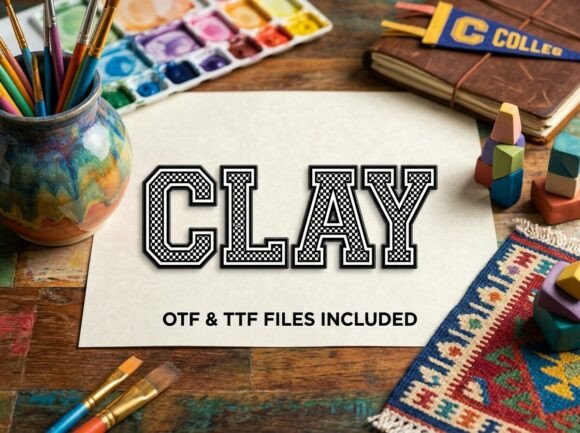
Before diving into applications, it's crucial to understand what you're working with. Clay is a premium font categorized as a display typeface. This means it's specifically engineered for large sizes and short bursts of text—think headlines, logos, and titles—rather than body copy. Its defining characteristic is its all-caps nature, meaning it contains only uppercase letters. This isn't a limitation; it's a deliberate design choice. Each letterform is crafted as an individual work of art, with unique artistic elements that give it a strong visual personality. When you set a word in Clay, you're not just spelling something out; you're creating a visual statement.
The font's aesthetic leans into a modern, handcrafted feel. It avoids the sterile perfection of some sans serif fonts and the traditional formality of classic serif fonts. Instead, it occupies a space that feels both contemporary and tactile, making it an excellent choice for projects that aim to connect on a more personal, artisanal level. It’s a creative font designed to break away from the ordinary, giving designers and entrepreneurs a way to inject immediate character into their work.
Where This Artistic Font Truly Shines: Practical Applications
Theory is one thing, but real-world use is where value is proven. The versatility of a display font like this is broad, but its impact is most profound in specific scenarios where its bold character can be fully appreciated.
- Brand Identity & Logo Design: For a brand that wants to convey creativity, boldness, or a handcrafted ethos, Clay can form the cornerstone of its visual identity. Imagine a boutique coffee roaster, a pottery studio, an independent record label, or a modern artisan bakery using this typeface for its logo. It instantly communicates a specific vibe—creative, confident, and unique. It helps in building strong brand recognition because the typography itself becomes a memorable asset.
- Packaging Design: On a crowded shelf, packaging has to grab a consumer's eye in seconds. Using Clay for the product name or a key descriptor on labels for specialty foods, cosmetics, or craft beverages can create that crucial first impression. Its strong visual personality suggests quality and care, which can influence purchasing decisions.
- Digital & Social Media Graphics: In the fast-scrolling world of social media, a striking headline is everything. This font is perfect for Instagram post titles, YouTube thumbnails, Pinterest pins, and Facebook ad graphics. It ensures your message is legible and impactful even at smaller sizes on a mobile screen, helping to boost audience engagement by stopping the scroll.
- Editorial & Print Materials: Think beyond digital. For event posters, magazine feature headlines, or book covers, Clay provides a dramatic focal point. It can also be used for monograms or decorative initials on stationery, wedding invitations, or business cards, adding a layer of bespoke artistry. In editorial design, it can be used to create powerful pull quotes or section headers that guide the reader's eye.
Making It Work: Pairing and Professional Presentation
Using an all-caps display font effectively requires a bit of strategy. Its strength is in its impact, so using it for long paragraphs would be overwhelming and difficult to read. The key is contrast and pairing.
A fundamental principle of modern typography is pairing a loud, expressive typeface with a quiet, functional one. For the body text accompanying your Clay headlines, opt for a clean, highly readable sans serif font or a classic serif font. This creates a clear visual hierarchy: Clay grabs attention for the main message, while the paired font delivers the supporting information with clarity and readability. This practice enhances visual consistency across your project, ensuring it looks polished and professional.
Always test your pairings. Place your headline in Clay next to a paragraph in your chosen body font. Does the mood match? Is there enough contrast in weight and style? Does the body text feel overshadowed, or does it complement the headline? This testing phase is critical for achieving a harmonious and effective layout. Consider the included files—OTF for advanced software with more typographic features, and TTF for universal compatibility—to ensure your workflow is smooth whether you're designing in Adobe Illustrator or a simpler program.
Aligning the Font with Your Project's Goals
Choosing a typeface is a strategic decision. It's not just about what looks cool; it's about what communicates the right message. Ask yourself: What is the core personality of my brand or project? Is it playful, luxurious, rugged, minimalist, or eclectic? Clay has a distinct voice that aligns with creativity, artistry, and bold expression.
If your project is a corporate law firm's website, this might not be the right fit. But if you're a freelance graphic designer, a maker selling on Etsy, a blogger with a vibrant personality, or a startup launching an innovative product with a creative edge, this typeface could be the perfect match. It serves as a powerful design asset within your toolkit.
Finally, consider the practical side: licensing. A commercial font typically comes with a license that permits use in commercial projects, which is essential for logos, merchandise, and client work. Always review the license details provided with your purchase to understand the scope of use. This ensures you're legally covered and can use your new creative font with confidence across all your marketing assets, from web design to printed merchandise.
In the end, typography is one of the most powerful tools in your visual arsenal. A font like Clay isn't just a set of letters; it's a personality, a mood, and a statement. By understanding its nature as an all-caps display font and applying it thoughtfully to the right projects—from logo design to social media graphics—you can leverage its artistic strength to make your work more engaging, memorable, and professionally polished. It’s about giving your visual voice the exact tone it needs to be heard.